
COUNTRIES

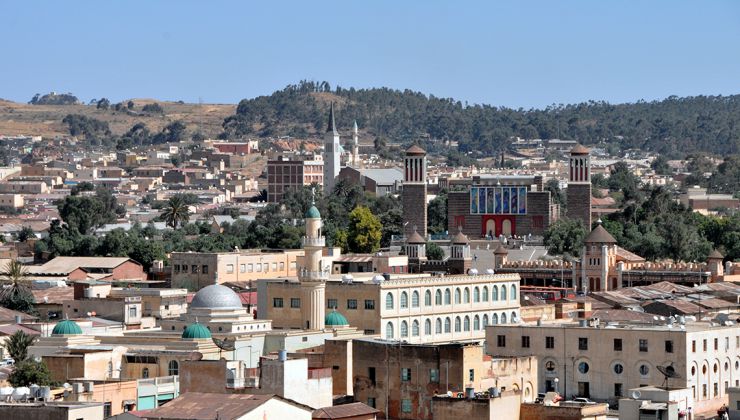
Eritrea

Sponsored By
Official name: State of Eritrea.

Geographical location :
A country in the Horn of Africa, along the Red Sea coast. It borders Sudan to the west, Ethiopia to the south, and Djibouti to the southeast..

Population (thousands, 2024)
~ 0

(i.e. 3,535,603)

GDP per capita (2024)
~ USD 0

nominal (Data Commons), current US$

Note. Official recent data are limited or not publicly updated; World Bank’s latest series does not list a reliable value ~ USD 0.00

Why Eritrea is considered a “failed state”

Eritrea embodies extreme authoritarianism, institutional repression, and a de facto militarized social order. The regime maintains indefinite national service, severely restricts civil liberties (no independent media, no opposition parties), and systematically represses dissent — often compared with “gulag-style” secret detention.

Economic mismanagement, external isolation, and lack of institutional accountability further deepen fragility. According to the BTI Report 2024, almost no private enterprise can thrive, and the state expropriates diaspora investments in failed public projects.

Written by
FSpub

Content management, producing a series of regular analytical reports and scientific publications with practical recommendations for international organizations, donor governments, and recipient countries.

Related Articles

Senegal

Senegal is often viewed as relatively stable in West Africa, but it...

Niger

Mozambique exhibits multiple classic symptoms of state fragility: structural governance weaknesses, corruption...

Mozambique

Mozambique exhibits multiple classic symptoms of state fragility: structural governance weaknesses, corruption...

Mauritania

Mauritania displays multiple features of state fragility: concentration of power, weak institutional...

    Add information/indicate an inaccuracy!

    Collecting and verifying statistical data for this country is complicated by limited access to official statistics, frequent incomparability of methodologies across years and periods, and political restrictions on publishing information. We adhere to the principles of academic integrity and data reproducibility. If you have any clarifications, additional sources, or comments, please use the "Add information/indicate an inaccuracy" form.